Coffee has stimulating effects on the central nervous system by delivering caffeine, which increases alertness, improves focus, and reduces fatigue. It can raise heart rate and blood pressure temporarily, yet coffee consumption is linked to a lower risk of hypertension, according to a 2016 study published in European Journal of Clinical Nutrition by Giuseppe Grosso. Coffee may also improve metabolism and support cognitive function, but excessive intake can cause anxiety, insomnia, or digestive issues.
Coffee is not inherently harmful to healthy adults when consumed in moderate amounts (1-4 cups). Several studies support this, including a 2023 review by Stephen Safe published in the International Journal of Molecular Sciences. Drinking coffee might be bad for individuals who be are overly stressed, suffer from GERD symptoms such as acid reflux, are trying to conceive, or are pregnant or breastfeeding. While drinking coffee first thing in the morning might cause heartburn and acid reflux in some people, it doesn’t necessarily break a fast or cause bloating. It can, however, stain your teeth and clothes, and disrupt sleep. Myths about coffee stunting growth, causing kidney stones, or leading to weight gain have been debunked.
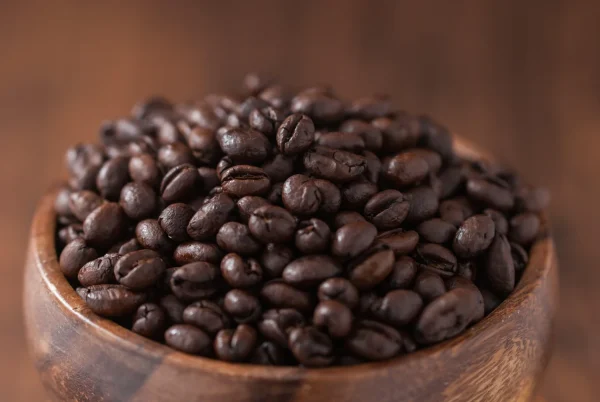
Forms of coffee refer to the physical or processed states in which coffee is sold or consumed—such as whole bean, ground, instant, or ready-to-drink—each offering different levels of preparation, convenience, flavor, and intended use. The 9 main forms of coffee are listed below.
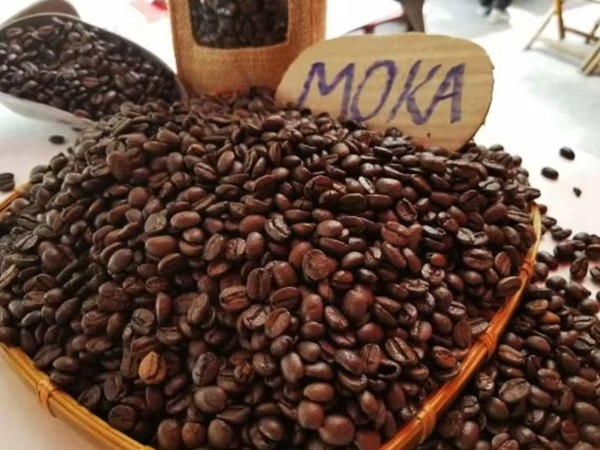
Whole bean coffee consists of roasted coffee beans that have not been ground. These beans are stored intact and ground just before brewing to preserve freshness, flavor, and aroma. In the whole bean vs ground debate, whole bean coffee is preferred by enthusiasts who value control over grind size and brewing method.
Ground coffee is roasted coffee beans that have been milled into smaller particles for brewing. It is ready to use and comes in various grind sizes suited to specific brewing methods like drip, espresso, or French press. Ground coffee offers convenience but loses freshness faster than whole beans.
Instant coffee is a dehydrated form of brewed coffee made by freeze-drying or spray-drying liquid coffee extract. It dissolves quickly in hot water and offers a fast, convenient way to prepare coffee without brewing. While less flavorful than fresh coffee, it has a longer shelf life and easy storage.
Single-serve coffee refers to pre-measured coffee portions designed for one-time use in machines like Keurig or Nespresso. It includes pods, capsules, or pouches that simplify brewing and reduce waste. Single-serve coffee offers speed and convenience but can be more expensive and less eco-friendly than traditional methods.
Ready-to-drink coffee is pre-brewed, packaged coffee sold in bottles or cans for immediate consumption. It requires no preparation and comes in various styles, including cold brew, lattes, and flavored options. This format offers convenience, extended shelf life, and portability but may contain added sugar or preservatives.

Coffee concentrate is a strong, liquid form of coffee made by brewing coffee with less water to produce a dense extract. It is used as a base for iced coffee, lattes, or mixed drinks and can be diluted before serving. Coffee concentrate offers convenience, long shelf life, and bold flavor.
Flavored coffee is coffee infused with additional taste elements such as vanilla, hazelnut, caramel, or spices. Some popular flavored coffees include French vanilla, cinnamon hazelnut, and chocolate mocha. These flavors are added to coffee beans after roasting or to the brewed coffee itself to enhance taste without adding sugar. Some flavored coffees use natural flavorings like essential oils or extracts, while others use synthetic compounds. Always check the label to see if sweeteners or artificial additives are included.
Green coffee refers to raw, unroasted coffee beans that retain their natural chlorogenic acids. It is often used in supplements for weight loss and antioxidant benefits. Unlike roasted beans, green coffee has a milder flavor and lower caffeine content but requires special preparation for brewing.
Decaf coffee is coffee from which most of the caffeine has been removed through chemical or water-based processes. It offers the flavor of regular coffee with significantly less stimulant effect. Decaf is suitable for people sensitive to caffeine, though it may still contain trace amounts.
Mushroom coffee is a blend of ground coffee and powdered medicinal mushrooms such as lion’s mane, reishi, or chaga. The drink provides caffeine with added compounds like antioxidants and adaptogens. Mushroom coffee often contains about half the caffeine of regular coffee while supporting focus, energy, and immune health.
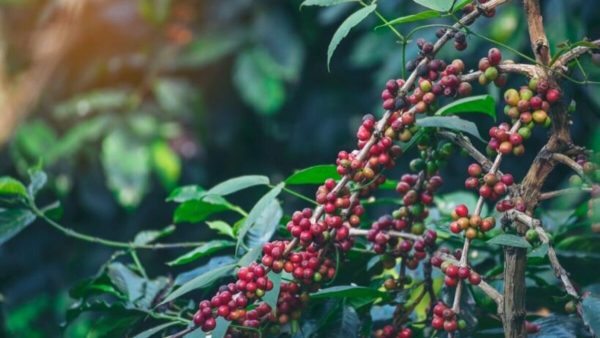
Coffee beans are the seeds of the coffee plant (Coffea), a shrub or small tree native to tropical regions and belonging to the Rubiaceae family. The coffee tree is a long-lived shrub, with a lifespan of up to 70 years. It first flowers in its third year, but profitable coffee bean production typically begins in the fifth year.
The coffee tree has evergreen, spear-shaped leaves that grow in pairs. The fruit of the coffee tree, called a coffee cherry, contains coffee beans. Coffee cherry changes color as it ripens, transitioning from green to red (or purple) to black. The ideal time for harvesting coffee cherries is when they are red (or purple). Each cherry usually contains two flat coffee beans, although single, round beans known as “peaberries” can also occur. After harvesting, the coffee beans are removed from the fruit, processed, and then referred to as green coffee beans. Once roasted and grounded, coffee beans release their distinctive aroma and flavor, ready to be brewed.
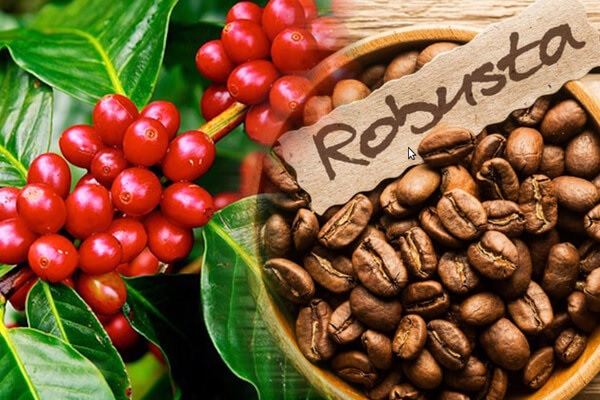
The four main types of coffee beans are Arabica, Robusta, Liberica, and Excelsa. Arabica is the most popular for its smooth flavor and lower caffeine. Robusta is stronger and higher in caffeine. Liberica and Excelsa are least popular types of coffee beans and used in niche or regional blends.
The main difference between Arabica and Robusta coffee beans is in taste and caffeine content. Arabica beans offer a smoother, sweeter flavor with fruity or floral notes and have less caffeine, while Robusta beans taste bolder and more bitter, with nearly double the caffeine. Arabica beans contain more sugar (5-9%) and polysaccharides (48-55%) than Robusta, which has 4-7% sugar and 38-48% polysaccharides, resulting in a sweeter, complex flavor. In contrast, Robusta’s lower sugar content gives it a bitter, sometimes rubbery taste.
Different coffee bean varieties, including Bourbon, Typica, Geisha, Caturra, Kona, and more, are genetically distinct groups within a coffee species. They differ in terms of origins, growing regions, altitude, bean size, susceptibility to leaf rust, yield potential, flavor profile, and nutritional values.
Coffee varieties arise through natural evolution (mutations) or intentional breeding (hybrids) between different types of coffee plants. Cultivars are specific coffee varieties that have been selected and maintained through cultivation for their desirable traits like disease resistance, higher yield, or unique flavor profiles. In the strictest sense, a coffee “cultivar” is a plant variety that has been produced through cultivation and is maintained through farmer-assisted propagation. All coffee cultivars are varieties, but not all coffee varieties are cultivars.
Kona coffee is grown on the slopes of Hualalai and Mauna Loa in the North and South Kona Districts of Hawaii’s Big Island. These areas within Hawaii’s Kona district provide the unique combination of volcanic soil, high altitudes, warm temperatures (70-80°F), and abundant rainfall that create ideal conditions for growing Kona coffee. The area’s cloud cover and morning sunlight balance temperature, promoting optimal bean development. Regular rainfall provides consistent moisture, essential for healthy coffee plants. Kona coffee is known for its high quality and ranks among the world’s most expensive coffees.
Coffee growing regions are tropical areas located within the ‘Bean Belt,’ a region between 25°N and 30°S of the Equator. This area offers an ideal climate for coffee with mild temperatures, ample rainfall, and specific soil types. Coffee is cultivated in over 50 countries worldwide, including North America, the Caribbean, Central and South America, Africa, the Middle East, Asia, and Oceania.
The top coffee producing countries include Brazil, Colombia, Mexico, Honduras, Guatemala, and Peru in Latin America, which supplies 55.5% of the world’s coffee and 80% of its arabica beans. Vietnam and Indonesia produce the most coffee in Asia, with Vietnam ranking as the world’s second-largest coffee producer.
Coffee beans grow best in warm, tropical climates with temperatures between 60-70°F (15-24°C) and require high humidity, frequent rainfall, and shaded sunlight. Ideal soil conditions are well-drained, slightly acidic (pH 6-6.5) with organic-rich content. Elevations between 2,000-6,000 feet (600-1,800 meters) often produce superior flavor profiles.
Single origin coffee comes from one specific location, such as a single farm, region, or country. It offers unique flavor profiles influenced by local climate, soil, and processing methods. Coffee enthusiasts value it for its traceability, purity, and distinct taste compared to blended coffees. Single-origin coffee is often preferred for its distinct flavor, but preference for single-origin versus blends is subjective, varying by individual taste. Single origin are often more complex and nuanced than blends, showcasing varied flavors influenced by their unique growing conditions.
Coffee is made through processing steps that include harvesting, drying, milling, roasting, grinding, and brewing. After cherries are picked, they are either dry or wet processed to remove the fruit. Beans are then hulled, graded, roasted to develop flavor, ground to the right size, and brewed.
Coffee beans are harvested using two main methods: hand-picking and mechanical harvesting. Hand-picking allows selective harvesting of ripe cherries, commonly used in high-quality production. Mechanical harvesting uses machines to strip cherries from branches, often used on flat, large farms. Each method affects bean quality and labor cost.
The main types of coffee processing methods are dry (natural), wet (washed), honey, and anaerobic. Dry processing involves drying whole cherries in the sun. Wet processing removes pulp before drying. Honey processing leaves some mucilage on the bean. Anaerobic uses sealed tanks for fermentation.
Coffee certification is a verification system that ensures coffee is produced according to specific environmental, social, or economic standards. It confirms practices like ethical labor, organic farming, or sustainability. Certifications provide transparency for consumers and support responsible production across the coffee supply chain. The 5 main coffee certifications are listed below.
Coffee is graded based on factors like bean size, shape, color, moisture content, and defect count. It is also cupped and scored for flavor, aroma, acidity, and body. Specialty coffee scores 80+ points. Grading systems vary by country but follow standards from groups like the SCA.
Specialty coffee means high-quality coffee that scores 80 points or above on a 100-point scale by the Specialty Coffee Association. It is made from premium Arabica beans grown in ideal conditions and carefully processed and roasted. Specialty coffee focuses on great taste, knowing where the beans come from, and making sure farmers are treated fairly.
Coffee cupping assesses coffee beans by aroma, flavor, acidity, body, and aftertaste, helping grade them for quality and compare cultivars. This standardized tasting method identifies beans’ flavor profiles and quality attributes, including aroma and acidity. Coffee beans with the highest cupping score are often sold at premium prices, marketed as specialty coffee, and selected by roasters seeking high-quality, distinct flavors.
Coffee roasting is the process of heating green coffee beans to develop their flavor and aroma. The science behind coffee roasting involves complex chemical reactions, such as the Maillard reaction, which typically occurs between 280-330°F (138-166°C) and creates the character and complexity of coffee. Coffee roasting process refers to the process of transforming green coffee beans into flavorful, aromatic brown beans through the application of heat. There are four coffee roasting stages including drying, browning, development, and cooling.
The main 3 types of coffee roasts are light, medium, and dark. Light roasts preserve acidity and origin flavors. Medium roasts balance acidity and body. Dark roasts offer bold, smoky flavors with lower acidity but can mask bean origin. Besides these main categories, there are several coffee roast levels that fall in between and offer more specific flavor profiles. The 12 coffee roast levels are listed below.
Source: colipsecoffee.com